Which Chest Measurement Is on the T-Shirt Size Sheet?
Ask whether a T-shirt chart describes the wearer or the finished garment, then keep its measurement points and sample condition visible.
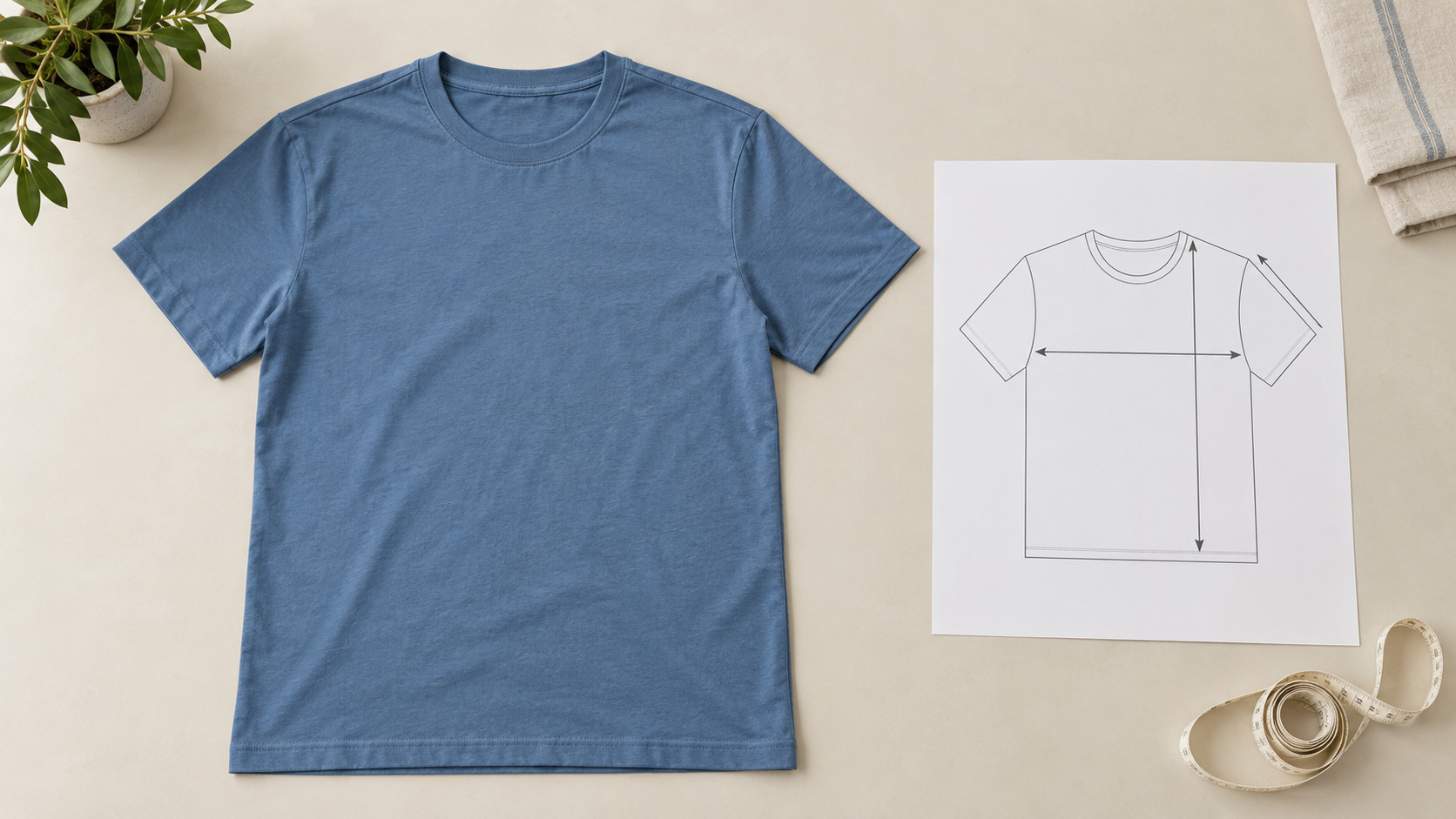
Before comparing two T-shirt size sheets, I would ask what each chest entry measured. One could describe a body measurement used for fitting, while another could describe the garment laid flat. A heading that simply said chest would leave that unresolved. I would ask the supplier to identify the basis on the sheet before deciding that the smaller figure meant a smaller T-shirt.
For a finished-garment chart, I would request a simple front drawing with the measurement line marked. Stanley/Stella's published Stella Ella size guide provides an example: it names a half-chest measurement separately from body length and shows measurement lines on a garment diagram. For another supplier's shirt, I would ask for its own drawing to be returned with the chart and keep the manufacturer's example outside the order specification. The quotation would need the chart for the actual offered style, with its units stated.
The location of the horizontal line would need confirming. I would send the supplier an unmarked front sketch and ask it to return the chest line it used, showing where that line sat below the armhole. I would attach the returned sketch to its own chart. For another offer with a line in a different place, I would ask for the requested measurement to be returned before filling in a comparison column. A photograph of the sample with the agreed measurement visible could accompany the chart. The photograph would record that sample and its method; it would not establish the dimensions of every shirt in the order.
Body length would have its own starting and ending points. I would put a dot at each end of the supplier's returned measurement line and ask it to name those points on the sketch. A shoulder-to-hem line would stay distinct from one starting at the front neckline. For a shirt with different front and back hems, I would ask which hem the line ended at. The sleeve entry would get the same treatment, with its own line on the style drawing instead of a number copied from a different chart.
I would also ask which sample condition belonged to the chart. For an as-supplied measurement, I would write that condition above the results. If a care assessment had been agreed, I would keep the method and the resulting measurements on another sheet, with the sample reference still attached. I would not assume that a fabric name or a soft hand feel established dimensional stability. The target dimensions would have their own entries, and I would ask the supplier and buyer to agree the permitted variation against those targets.
For sampling, I would put the style, colour and labelled size on the measurement record. The returned sample could then be checked against the corresponding column, using the marked drawing. For a changed fit, I would leave the original sample record in the file and open another sheet under the proposed style reference. I would ask the supplier to return the new sample with that sheet, so the size label on the garment could be photographed beside the chart it belonged to. Before sending either chart to a retailer, I would check that its heading still said what had been measured: the garment on the table or the wearer dimensions supplied as fitting guidance.
Share the product, specifications, quantity and destination to discuss sourcing options.