Drill Inspection: Match the Report to the Tool on the Bench
A report is useful only when the drill and any supplied battery and charger can be identified against it. Plan that evidence trail before commissioning inspection.
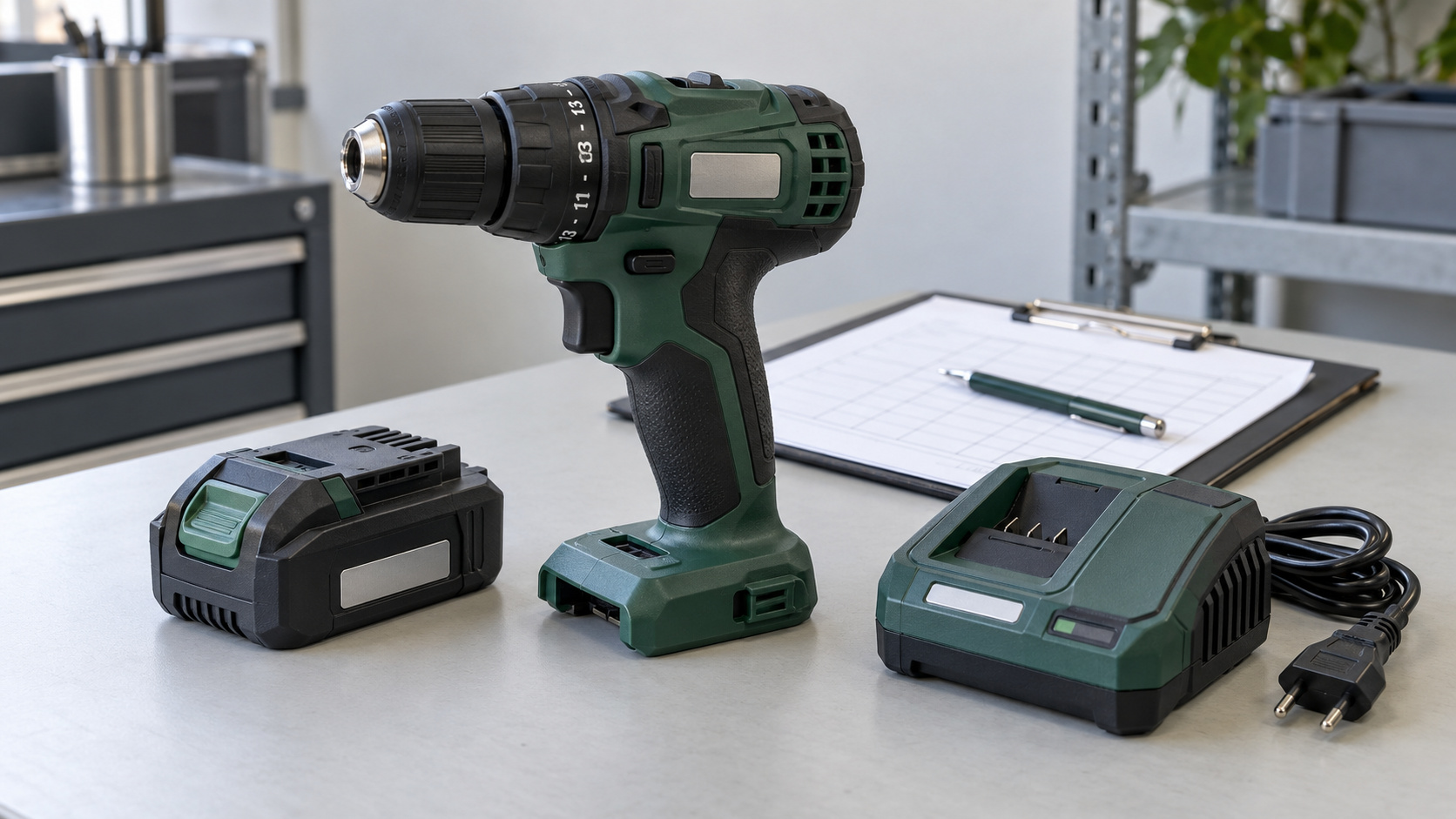
A drill can arrive with a report that looks quite thorough, yet leave the buyer unable to identify the model that was tested. I would resolve that uncertainty before commissioning another test. The first request would be a clear photograph of the tool's identification plate, alongside the model reference on the order. For a cordless kit, I would ask for the battery and charger identification as well. Calling the whole delivery a “drill set” is too imprecise for the inspection file I would want to keep.
I would read the report's product description before its results. Does it identify a bare tool, or a kit with named components? If there are several model numbers, I would ask the supplier to mark which one is being offered and explain the relationship to the others. A catalogue name used by the shop might not be the manufacturer's model reference. I would keep both names in the file rather than replace the model identifier with our retail description.
The next question would go to the report issuer: what does this report cover for this proposed configuration? I would send the actual model list and identification photographs with that enquiry. If the report could not be authenticated with the issuer, or the listed sample could not be connected to the offered product, I would record the uncertainty and ask for it to be resolved. A familiar-looking cover page would not answer either question. Nor would I copy a pass statement from one line of a report onto a different drill model in the purchase specification.
With a cordless version, I would put the battery and charger photographs beside the tool photograph and send all three for the compatibility enquiry. The instructions need to cover that combination before anyone charges or powers the kit. A voltage number alone would not be the confirmation I was asking for. Bosch's instructions for its GAL 12V/18V-80 charger offer a useful example: the manual names the battery types it can charge and calls for the charger specified by the manufacturer. For another make or model, I would request that product's own instructions. Borrowing the Bosch document would leave my original question unanswered.
The enquiry to the qualified inspector or laboratory would include a fairly direct request: “Please tell us which checks you are quoting for this configuration, how the units will be selected and where the acceptance limits come from.” I would read the reply against the purchase requirements before confirming the work. If it offered only a brief demonstration of the drill turning, I would still need an answer about the electrical safety assessment. Performance under load, if requested, would need an identified method as well. I would rather clarify the missing work at the quotation stage than receive a report for an inspection I had not intended to buy.
At delivery I would want to be able to find the sampled drill again. A carton reference recorded beside a model-plate photograph would help; an unidentified close-up would not. I would ask for the same link for any battery or charger included in the assessment. If the charger model on arrival differed from the one agreed, I would photograph its plate and send both model references back to the assessor. Until that change had been reviewed, I would leave the earlier conclusion attached to the earlier configuration. The response about the new one would stay in the file too, beside the photographs that prompted the enquiry.
Share the product, specifications, quantity and destination to discuss sourcing options.