Flat-Pack Furniture: Which Cam Connector Belongs to This Panel?
A cam connector belongs to a matched joint design. Read the panel drilling, connector bolt and cam specification together when reviewing flat-pack furniture.
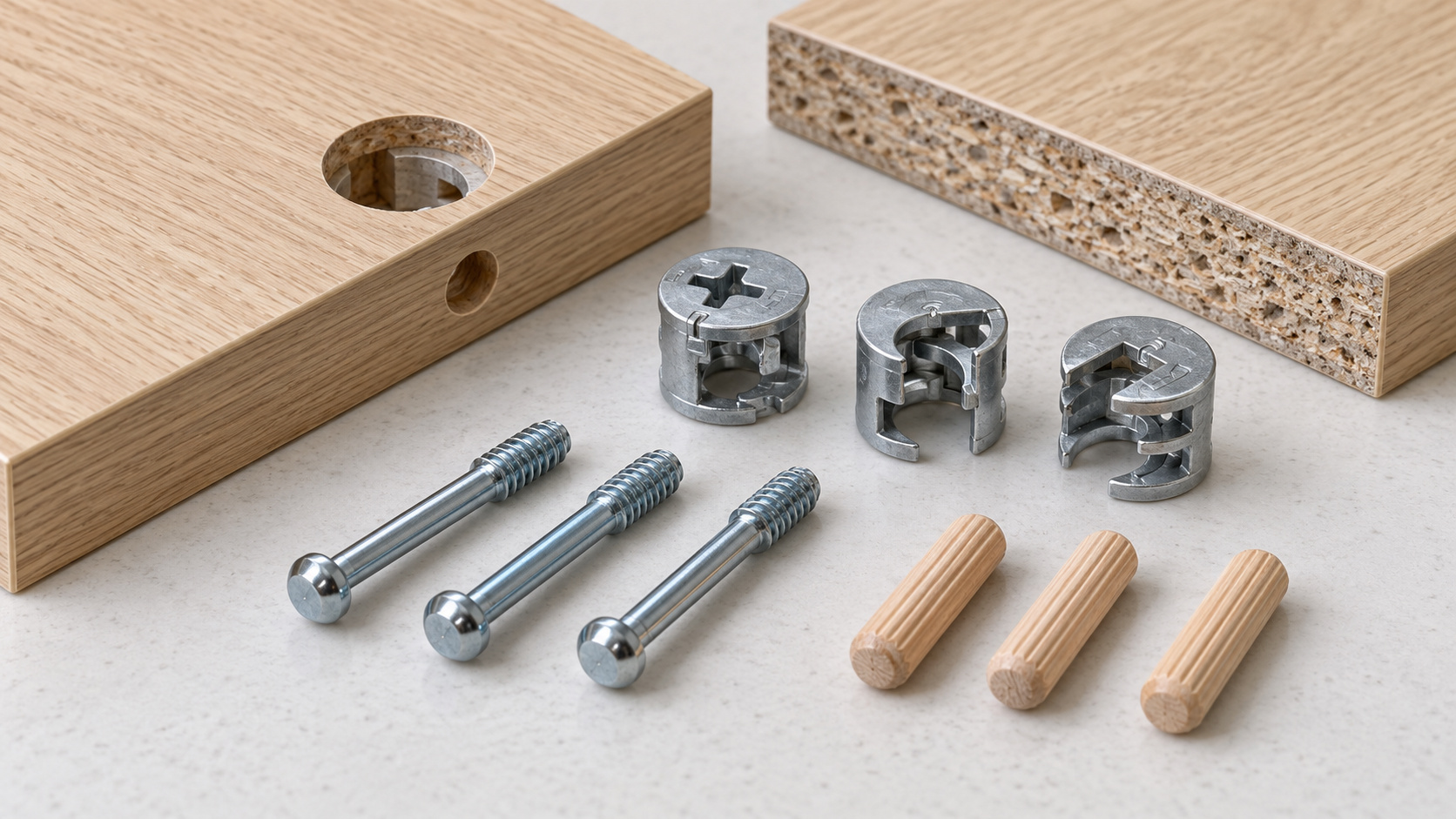
If I were asking for a spare cam fitting for flat-pack furniture, I would send the panel reference with the photograph of the loose part. I would keep the hardware bag's model reference in the enquiry too. The cam connector, its mating bolt and the prepared panel holes need to be considered together. A similar finish on two loose fittings would give me very little to work with when deciding whether one could replace the other.
The cam has to engage the connecting bolt's head in the position intended by the joint design. In a typical eccentric connection, turning the cam draws the engaged parts together. I would ask the supplier to point out the bolt-head position on the connector detail and show how it related to the panel holes. Seeing a round top that fitted the face hole would leave that internal relationship unanswered. I would want the drawing to explain it before comparing an alternative cam with the specified one.
Panel thickness belongs in that comparison. Hettich's Rastex information, for example, identifies fittings for particular panel thicknesses and provides drilling-pattern information. I would use the documentation for the actual supplied fitting, rather than take a dimension from one named product and apply it to another. I would check the specified hole depth and its distance from the panel edge on the approved furniture drawing, with the supplier identifying the corresponding connector reference. If the offer listed several board thicknesses, I would ask for the joint details belonging to each version.
Where the furniture design included wooden locating dowels, I would give them separate entries in the parts list. The metal connecting bolt and the wooden peg might arrive in the same bag, but I would want each reference shown against its position on the panel drawing. Those references would also need to appear in the assembly instructions. If someone later reported a missing “dowel,” I would ask them to identify the drawing reference or mark a photograph, so the supplier could tell which part to provide.
For a furniture sample, I would review the joint with the actual panels and the manufacturer's assembly instructions. I would look at whether the components presented were the specified ones and ask the supplier to explain any difference in the pre-drilled arrangement. I would keep photographs showing the joint reference and the relevant panel faces. A difference would go back with those photographs for the supplier's review against the approved drawing. I would keep that review separate from the assessment needed for the complete furniture, including its intended loading and use. I would not treat an informal substitution or extra drilling as approval of a revised joint.
For a later hardware request, I would send the furniture model, panel reference and connector detail together. If the supplier proposed a different bolt or cam, I would ask which part of the joint specification changed with it and how the revised configuration was to be approved. The same would apply if the board thickness changed during product development. Keeping those three elements together would let the discussion stay about the supplied joint, instead of treating a small bag of metal parts as a universal repair kit.
Share the product, specifications, quantity and destination to discuss sourcing options.