Hydraulic Cylinder RFQ: Put the Mounting Centres on the Drawing
Tie the quotation to a defined cylinder drawing, with mounting references, end fittings and port positions confirmed for the offered configuration.
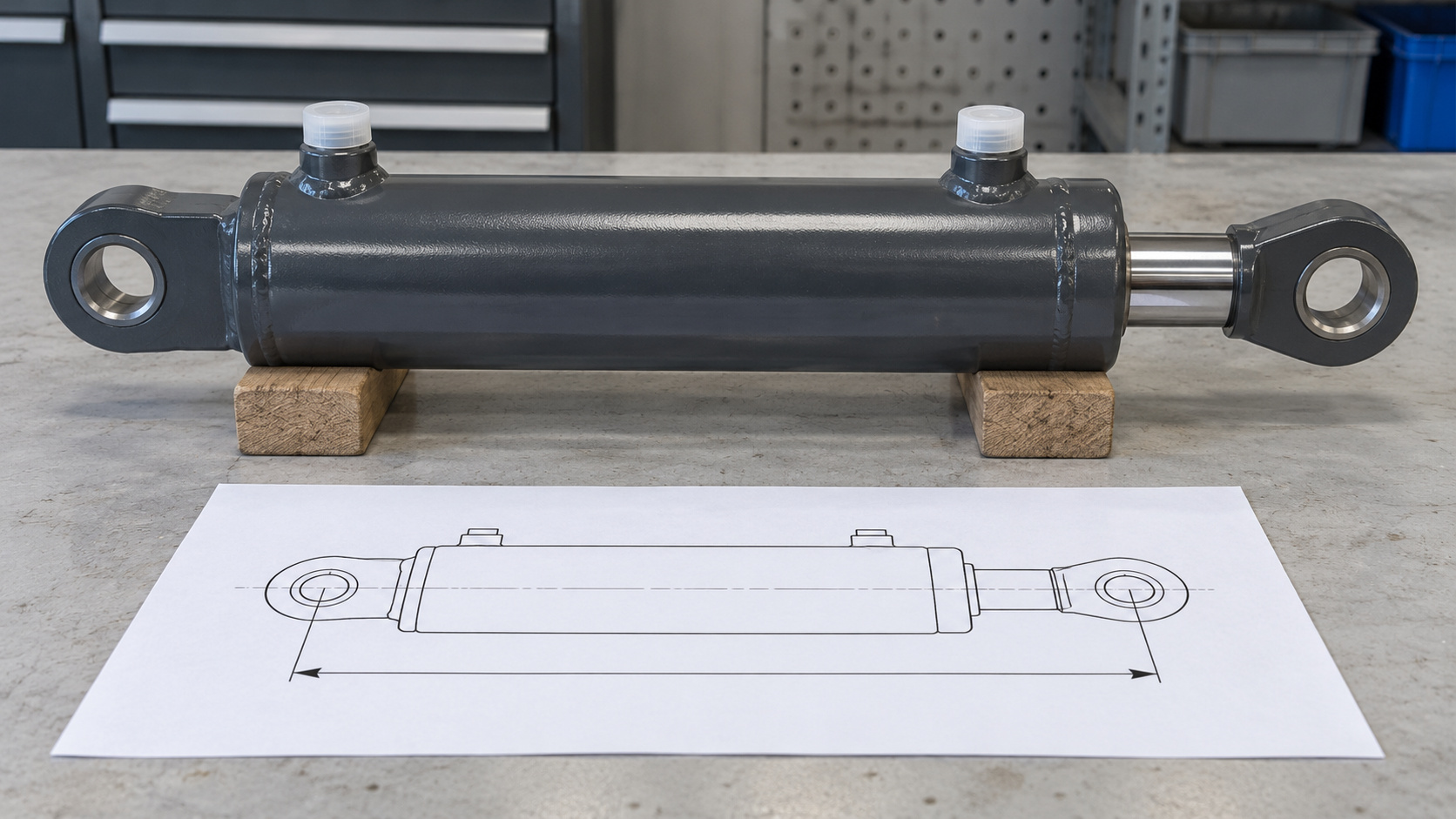
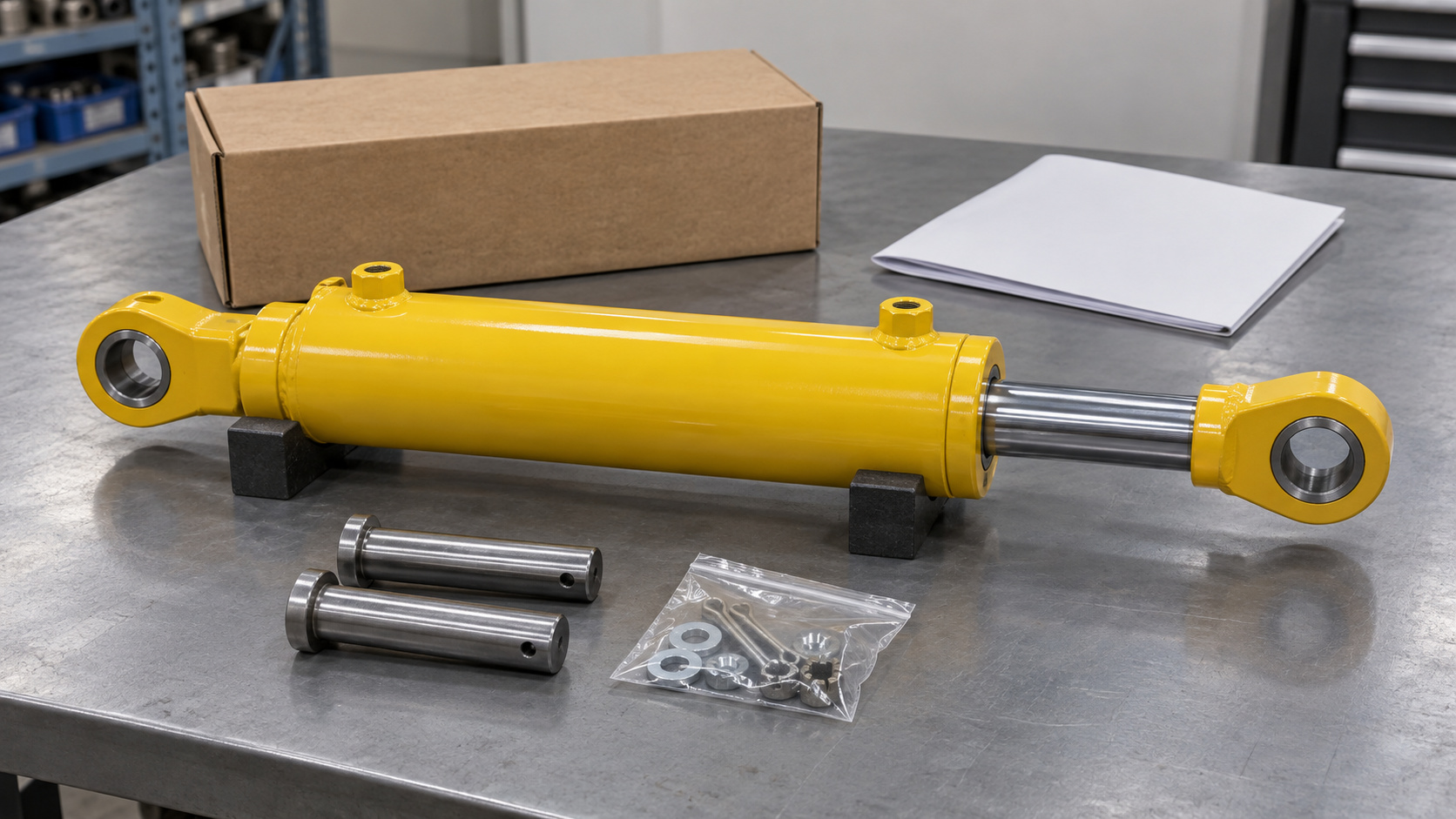
An enquiry giving only a hydraulic cylinder's bore and stroke would leave me waiting for a drawing before comparing prices. The stroke describes travel; it does not identify every dimension of the installed assembly. I would start the enquiry with the equipment's approved interface information, confirmed by the responsible engineer, and ask each supplier to mark the configuration being offered. That would give us a common reference for discussing the cylinder rather than rely on a photograph of a similar-looking unit.
For a pin-mounted cylinder, I would want the drawing to show the mounting centres in the fully retracted and fully extended positions, with the state clearly named beside each dimension. Magister Hydraulics' instructions for a pin-eye model, for example, describe those lengths from pin-hole centre to pin-hole centre and list them separately from overall length. I would use that as a reminder to define the reference points, not borrow that model's dimensions for another product. The supplier's returned drawing would need to identify its own end arrangement and the points being measured.
The end fittings would get details of their own. I would ask for the pin-hole diameters, the relevant widths and the orientation of the mounting features, as applicable to the specified design. A side view could be accompanied by an end view where it helped explain the relationship. If bushes, pins or rod-end fittings were included, I would have them identified in the quotation. An offer for a cylinder body with an unspecified end fitting would stay a different offer from the complete assembly until the contents had been agreed.
I would also want the port arrangement visible on the returned drawing. The port specification and location would need confirming for the actual interface, rather than inferred from the apparent diameter of a protective cap. If a supplier proposed an adaptor, I would ask them to show the supplied arrangement and submit it for engineering review. There could be a difference between a part that matched the headline dimensions and an assembly that left the required connection space in the equipment. I would keep that question with the interface review.
For a configurable model, I would keep the returned drawing and the selected code together. Parker's cylinder configurator is an example of a manufacturer providing CAD information about dimensions and motion in different positions. A file generated for one configuration would still need to match the configuration in the quotation. I would ask the supplier to confirm the drawing reference, revision and supplied accessories in their reply. If a change were proposed after approval, I would want the revised drawing returned before updating the order.
The dimensional agreement would sit alongside the operating requirements supplied for the application, including the relevant duty and pressure requirements for engineering assessment. A matching centre distance alone would not approve the cylinder for those conditions. I would agree what inspection and test records were to accompany the shipment, with the responsible specialist defining the required assessment. On receipt, I would check the identification and documentation against the approved configuration and record any difference. For future replacement enquiries, the same drawing and supplied-model reference could then travel with the order history.
Share the product, specifications, quantity and destination to discuss sourcing options.